Reading the On-site Signs
When you visit, official signs and maps at the foot and summit are the most authoritative first-hand source on its regeneration history. We translate and explain each one.
The following readings are based on on-site photos of the Seoul Metropolitan Government's regeneration signs, ecological maps and shuttle instructions.
Regeneration sign
Nanjido landfill & World Cup Park regeneration
난지도 매립지 · 월드컵공원 조성
Nanjido Landfill & World Cup Park Development
The sign records: Nanjido was Seoul's largest household-waste landfill (1978–1993); after closure it was ecologically restored with soil cover and greenery, and World Cup Park was built for the 2002 Korea-Japan World Cup. Haneul Park opened in 1999 as part of it — a public green space for citizens to climb and view the river.
Eco sign (KO/EN)
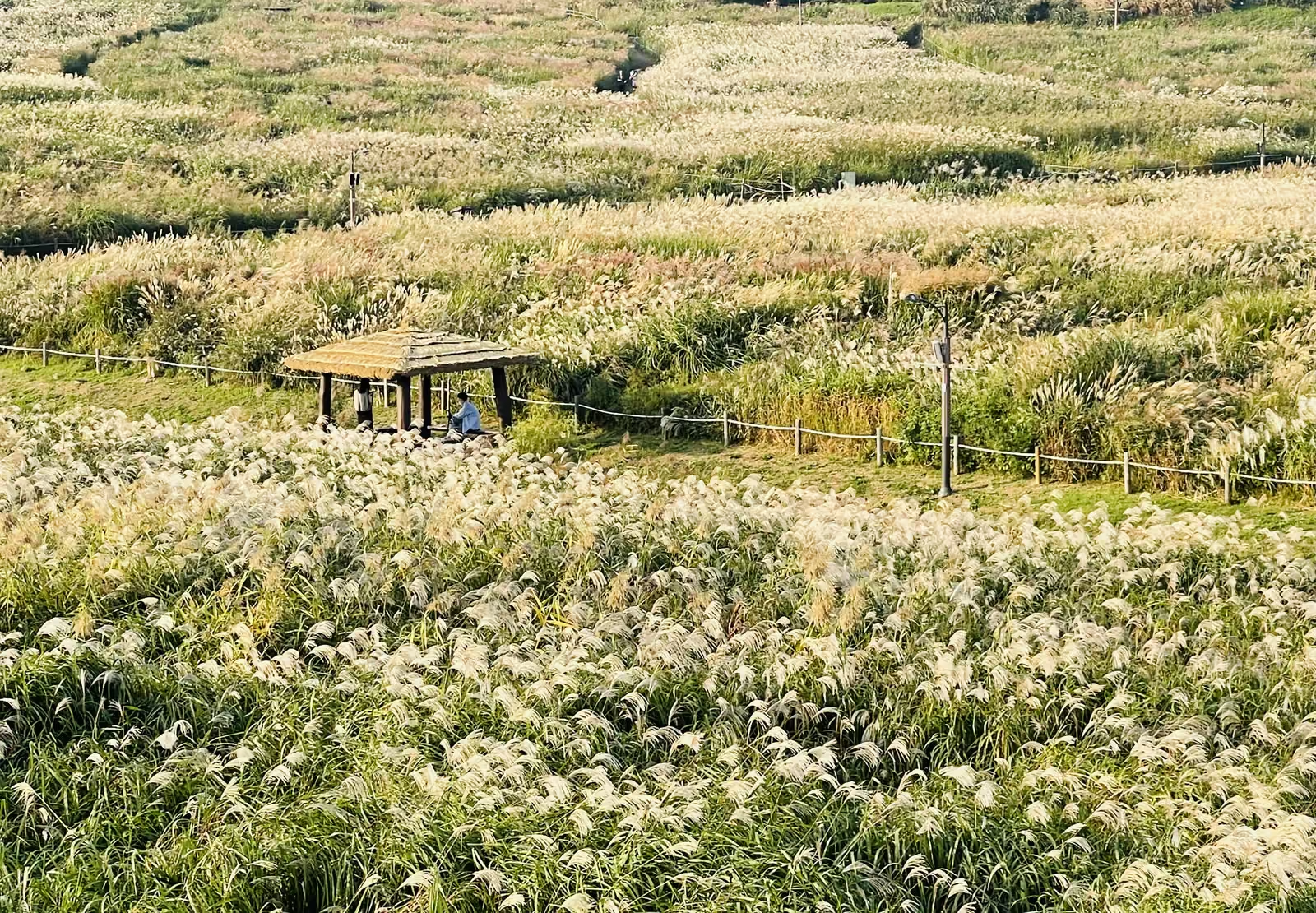
Silver-grass, birds & meadow ecology
억새 · 철새 · 초지 생태
Silver-grass · Birds · Meadow Ecology
The bilingual eco sign explains: the Haneul Park meadow naturally succeeded after landfill soil cover, with silver-grass (eulalia) as the dominant pioneer plant; in autumn the reeds turn snow-white, and in spring/summer it hosts insects and migratory birds — reminding visitors not to enter the slope and to protect it together.
Map & shuttle info
Stairs, boardwalk & eco-shuttle
계단 · 데크로드 · 에코셔틀
Stairs · Boardwalk · Eco-shuttle
The park map marks: 291 ecological stairs to the summit; an upper road for the eco-shuttle (eco-shuttle) with fixed stops and a fare; the grass ringed by boardwalks, with wheelchairs and strollers reaching the summit platform via the upper road. Note last-departure times and suspension in bad weather.